
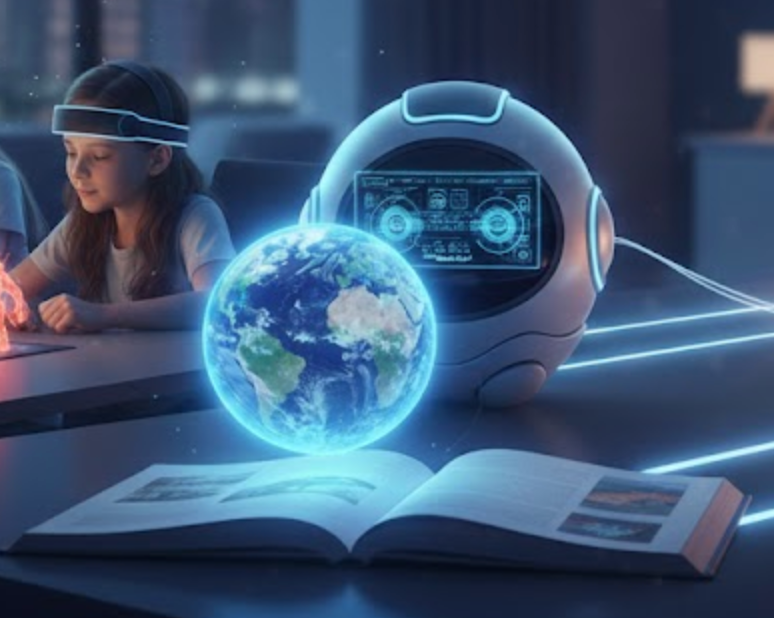
TThe Hook: We just hit the “Phygital” revolution. In 2026, the most popular toys aren’t just gadgets; they are AI-native companions that learn, adapt, and interact with the physical world. From robots that sense your child’s mood to tabletop games that turn your living room into a 3D hologram battlefield, these are the top picks for gamers and parents this year.
1. The ‘Yonbo’ AI Learning Companion
Yonbo has officially taken the top spot for kids’ AI in 2026. Unlike older smart toys, Yonbo focuses on social-emotional development. It doesn’t just answer questions; it senses if a child is frustrated or sad and adapts its storytelling to help them regulate their emotions. It’s essentially a 24/7 tutor and emotional life coach in one.
2. ‘Fuzozo’ & ‘Moflin’: The Emotional Support Pets
Debuted at CES 2026, Fuzozo is the “Star Trek Tribble” of the modern era. It uses cellular connectivity to follow you everywhere. Meanwhile, the Moflin robot (now retailing around $429) uses “emotional modeling” to develop a unique personality. If you ignore it, it gets grumpy; if you cuddle it, its “heartbeat” settles—making it a top gift for both children and lonely seniors.
Smart Toy Comparison: Is AI Right for Your Family?
| Feature | The “Pros” (Why Kids Love Them) | The “Cons” (What Parents Should Know) |
| Learning | Acts as a 24/7 personalized tutor that adapts to a child’s pace. | Can “hallucinate” or provide incorrect factual information. |
| Social Skills | Helps shy children practice conversation in a low-stakes environment. | Risk of forming an unhealthy emotional attachment to a machine. |
| Playtime | “Phygital” play blends real-world toys with immersive 3D holograms. | May replace the creative “imaginative labor” of traditional pretend play. |
| Safety | Some models like Grok allow parental overrides and content filters. | Concerns about continuous listening and data privacy of recordings. |
| Emotional Support | Robots like Moflin provide calming tactile stimulation. | High price points (often $400+) and limited battery life. |
3. Gundam Assemble: The AR Tabletop Revolution
Bandai Namco has finally bridged the gap between trading cards and video games with Gundam Assemble. By using your smartphone or AR glasses, the physical cards on your table trigger full-scale 3D battle animations. The market for AR board games is exploding, projected to hit nearly $20 billion as people crave “face-to-face” fun with a high-tech twist.
4. Neural-Link Racing: Mind-Controlled Speed
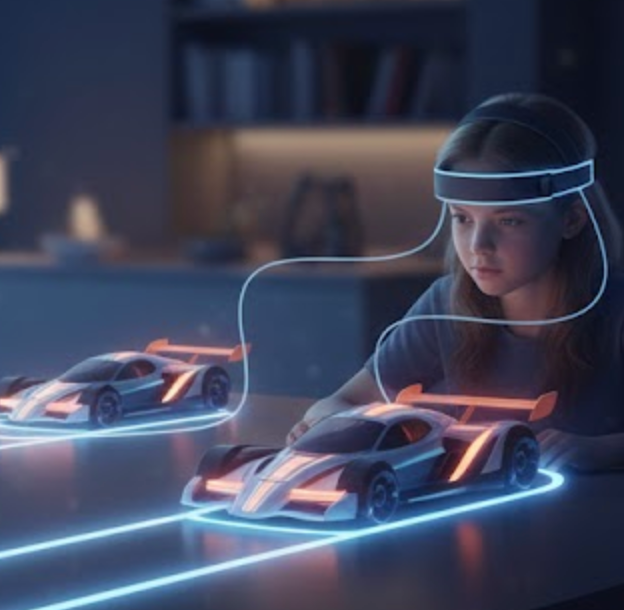
The “Telepathy” era is here. 2026 saw the release of consumer-grade headbands (inspired by Neuralink’s high-volume production) that allow players to control RC cars and digital racers using focus levels alone. No more controllers—the faster you think, the faster you drive.
“As we look toward the second half of 2026, the line between ‘toy’ and ‘teacher’ is disappearing. While the benefits of AI in early development are clear—especially in personalized tutoring—the responsibility remains with the parents. The most successful ‘AI families’ will be those who use these tools to spark real-world curiosity rather than replace it.” — Editorial Team, International Article

